
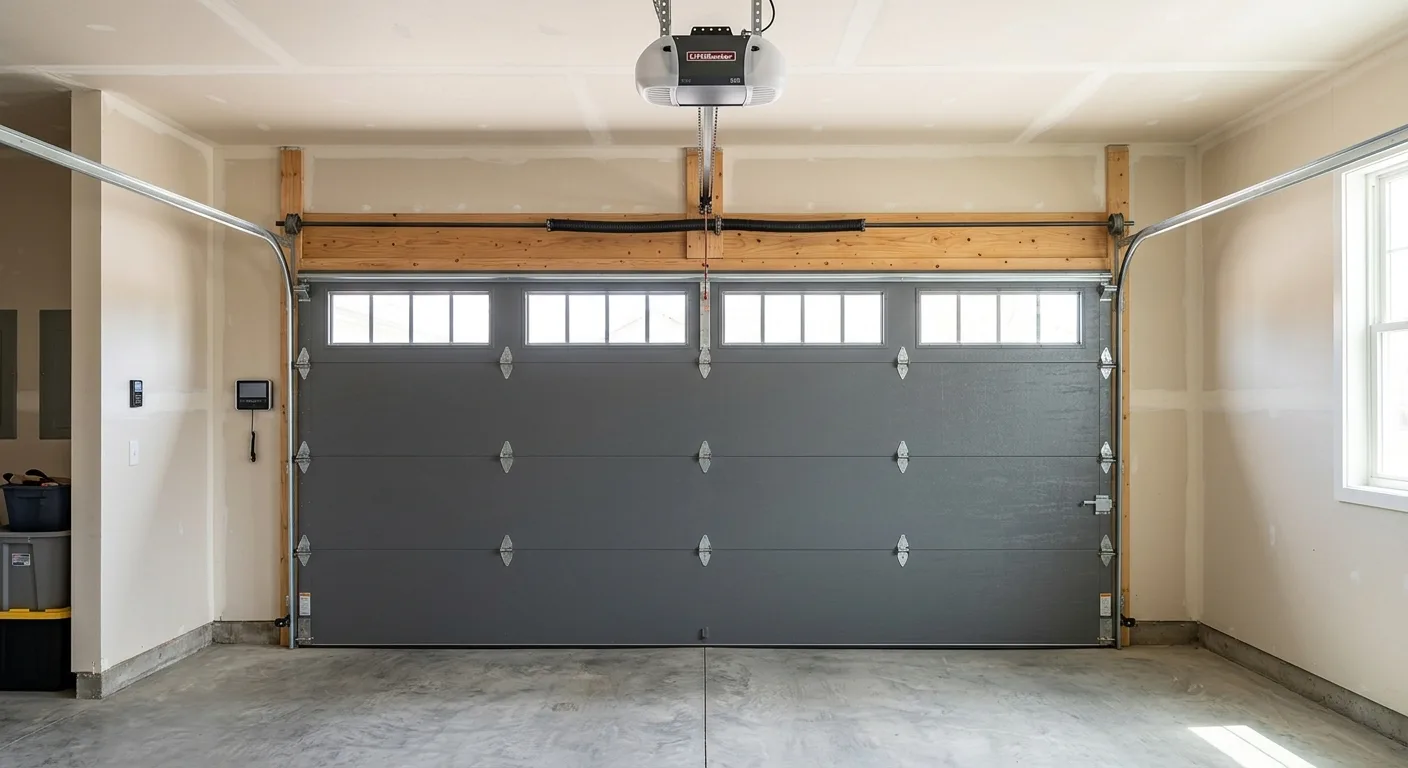
Minnesota Winter Garage Door Problems, and How To Get Ahead of Them
Every year our phone lights up the morning after the first hard freeze. Here's exactly which cold-weather symptom points to which failure, and what a fall tune-up stops before it strands your car.
What actually breaks on Minnesota garage doors when it gets cold
Your garage door worked fine yesterday and this morning it won't budge, or it climbs a few inches and stops, or the opener grinds and gives up. That's the winter breakdown, and it's the single most predictable service pattern we have. We've run garage door calls across Brainerd, Baxter, and the lake country up through Nisswa and Crosslake since 2010, and the truth is that cold weather rarely breaks a healthy door. It finishes off the parts that were already worn and picks the worst possible morning to do it. We're fully insured and bonded, we run 24/7, and if your door is down right now, call (218) 515-2702 and don't force it. The rest of this page is the triage: which winter symptom means which failure, and what a fall check catches before the deep cold does.
Here's the part most guides skip. The failures aren't random. After thirteen-plus winters on these roads we can almost call the order they come in: frozen bottom seals on the first freeze, snapped springs on the first sustained sub-zero stretch, then sluggish openers as the unheated garages settle into January cold. Knowing which one you're looking at tells you whether it's a five-minute fix or a truck roll.
- Fully insured & bonded
- 24/7 emergency response
- Local crew since 2010
- No callbacks, no upsells
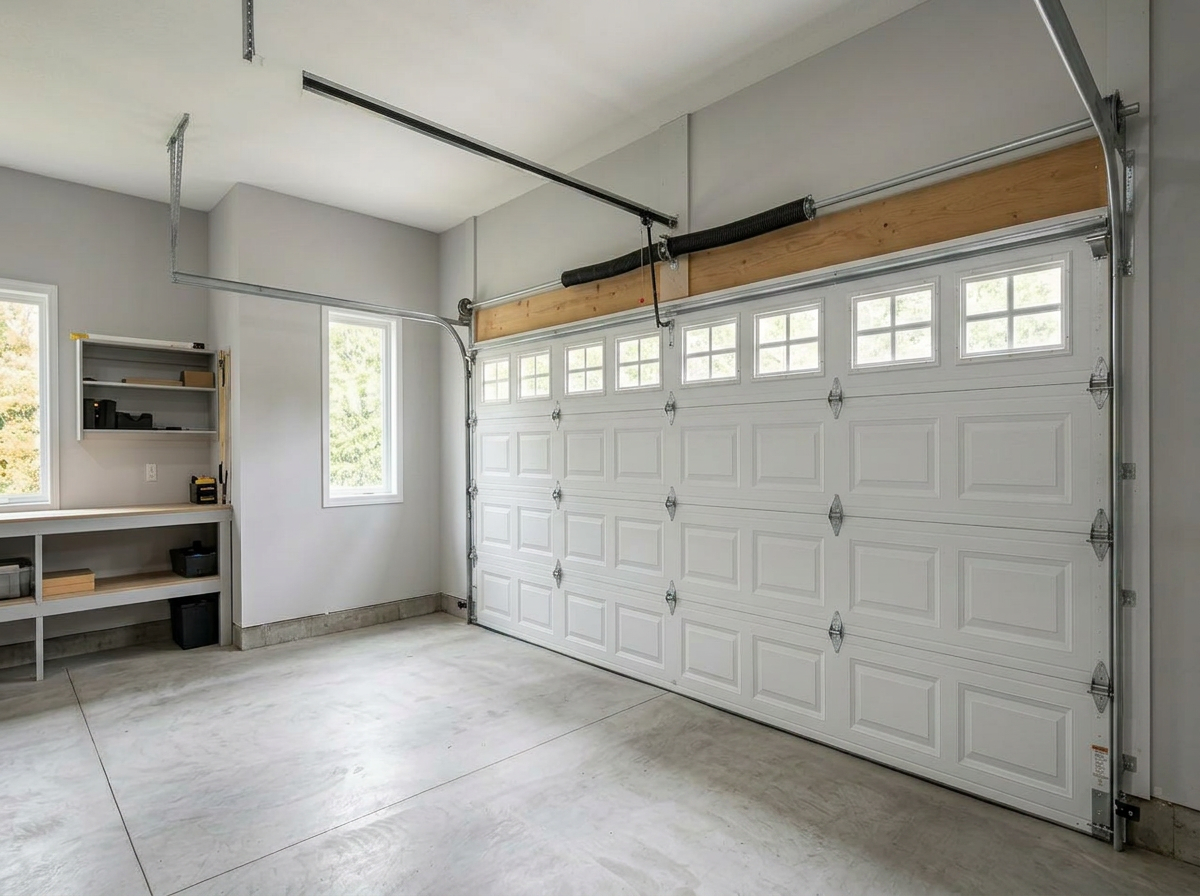
My garage door spring broke in cold weather. Why does that happen every winter?
A spring breaks in the cold because the cold is the last straw on a spring that was already spent. Steel contracts and gets more brittle as the temperature drops, so a spring that's been quietly wearing for years tends to let go on the first hard freeze. A standard torsion spring is rated for about 10,000 cycles, roughly seven years at four open-close cycles a day. If your door is past eight years on its original spring, cold weather isn't the cause of the break, it's just the timing.
"Our phone lights up the morning after the first real cold snap. Same story every year: the door was fine yesterday, and it wouldn't budge this morning."
Central Minnesota is harder on springs than a steadier climate would be. We swing from below-zero mornings to afternoon thaws all winter, and that repeated freeze-thaw cycling flexes the metal more than a constant deep cold does. The bigger lake homes we service around Nisswa and Crosslake tend to run wider, heavier doors, so their springs carry more load every cycle and reach the wear limit sooner. You'll usually know it's the spring: the door lifts three or four inches and stops, the opener strains against weight it can't move, or you heard a loud bang from the garage overnight.
- The door opens a few inches, then stops and won't go higher
- The opener motor runs but the door doesn't move, or moves crooked
- There's a visible two-inch gap in the coil on the shaft above the door
- Lifting the door by hand with the opener disconnected feels like dead-lifting the full weight
Ready when you are: call (218) 515-2702 and we'll bring the matching spring on the truck.
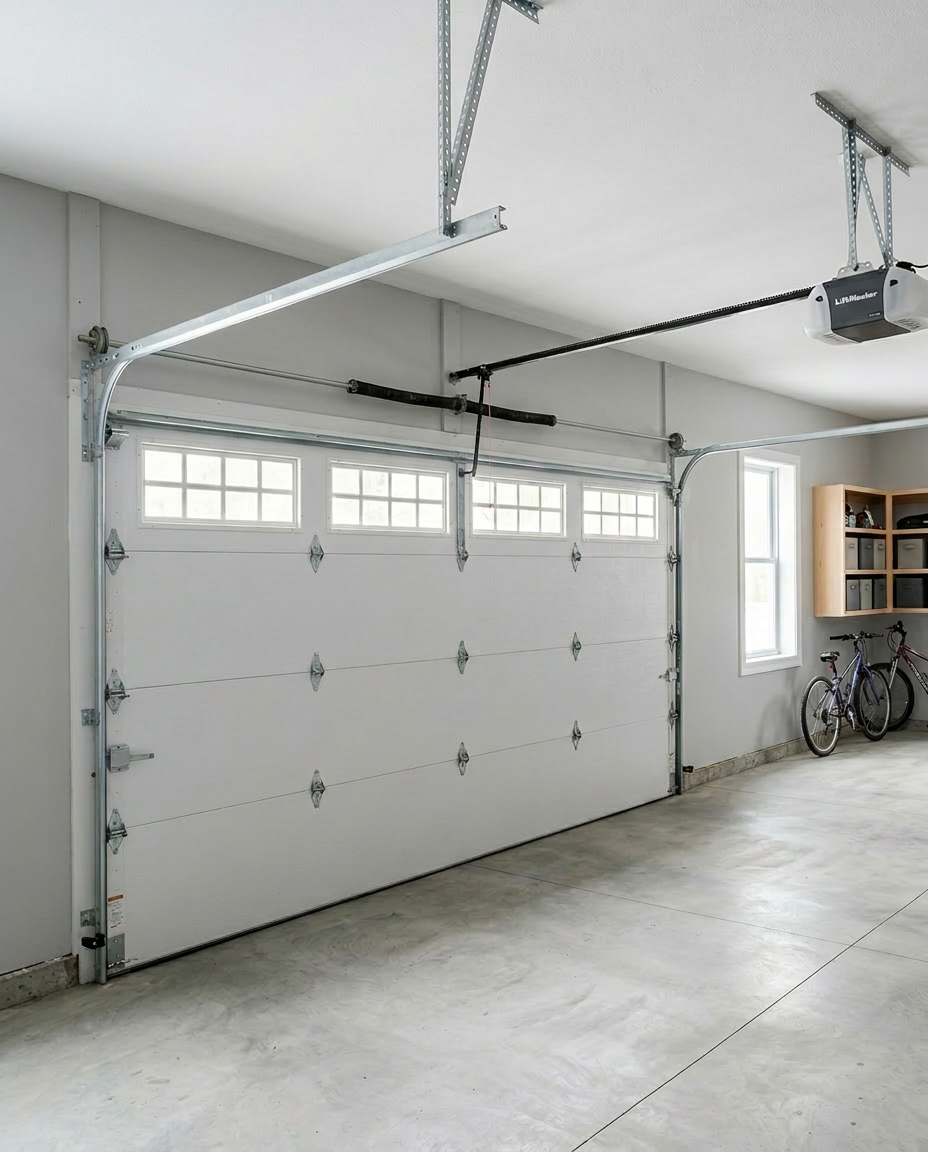
My garage door won't open in the cold in Minnesota. Is it the door or the opener?
Nine times out of ten a door that won't open on a cold morning is one of three things, and you can narrow it down in about a minute before you call. Pull the manual release rope (the red cord on the opener rail) to disconnect the door from the motor, then try to lift the door a foot by hand. What happens next tells you almost everything.
- It lifts easily by hand, but the opener wouldn't move it. The spring is fine. This is an opener, power, or sensor problem. Cold-stiffened grease, a marginal capacitor, or a photo-eye knocked out of alignment by frost heave are the usual winter culprits.
- It feels like dead-lifting the whole door. The spring is gone. Stop, leave it down, and don't run the opener. That's the broken spring failure from the section above.
- It breaks free on one side with a crack and racks crooked. The bottom seal froze to the slab. See the next section.
If you've isolated it to the opener, that's good news, it's usually the cheapest of the winter failures to fix. Our opener repair page walks through what actually fails and why we amp-test the motor and check the safety sensors before quoting a full swap you may not need. Not sure which of the three you've got? Call (218) 515-2702, describe what the door is doing, and we'll tell you straight over the phone.
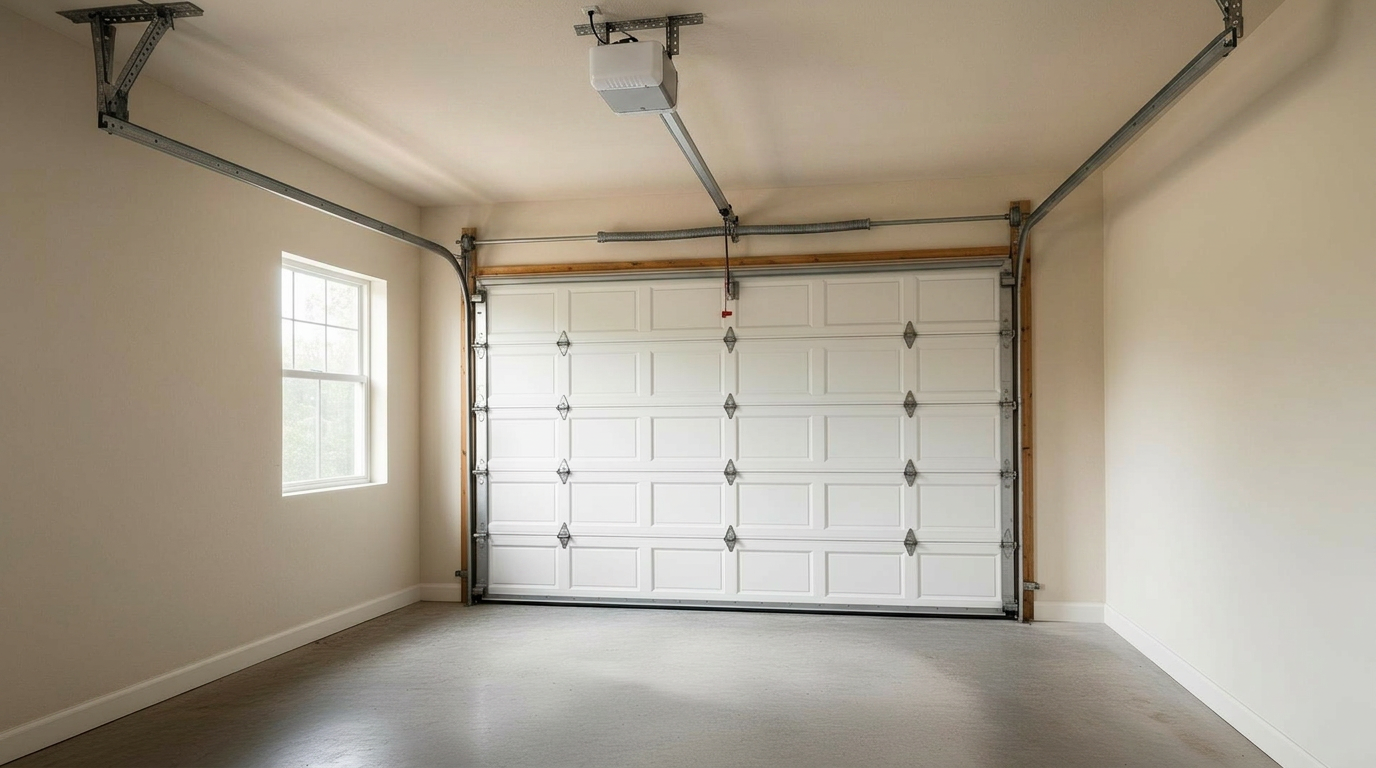
My garage door is frozen to the ground. How do I get it loose without breaking anything?
A door frozen to the slab is the most common winter call we run, and it's also the one that causes the most self-inflicted damage. Meltwater and slush run under the door during the day, refreeze overnight, and glue the rubber bottom seal to the concrete. Then you hit the opener, one corner breaks free, the other stays stuck, and the door racks sideways off the rail. The freeze is the easy part. The forced opener is what bends the track and pops the rollers.
"The frozen-door calls that turn into real invoices are never the ice. They're what happened after someone held the button down trying to make it break loose."
Here's how to free a frozen door without wrecking it:
- Stop pressing the opener button the second the door doesn't lift cleanly. One stuck corner plus opener force is how doors go off track.
- Break the seal at the floor, not with the motor. A plastic ice scraper, a heat gun on low held moving, or a hair dryer along the bottom seal will release the rubber from the concrete.
- Never use an open flame or boiling water. Flame damages the seal and boiling water just refreezes into a thicker sheet.
- Once it lifts freely by hand, cycle it a few times to clear ice from the tracks before trusting the opener again.
- If it already racked off the rail, leave it, disconnect the opener, and call. That's now an off-track door, a different and more urgent fix.
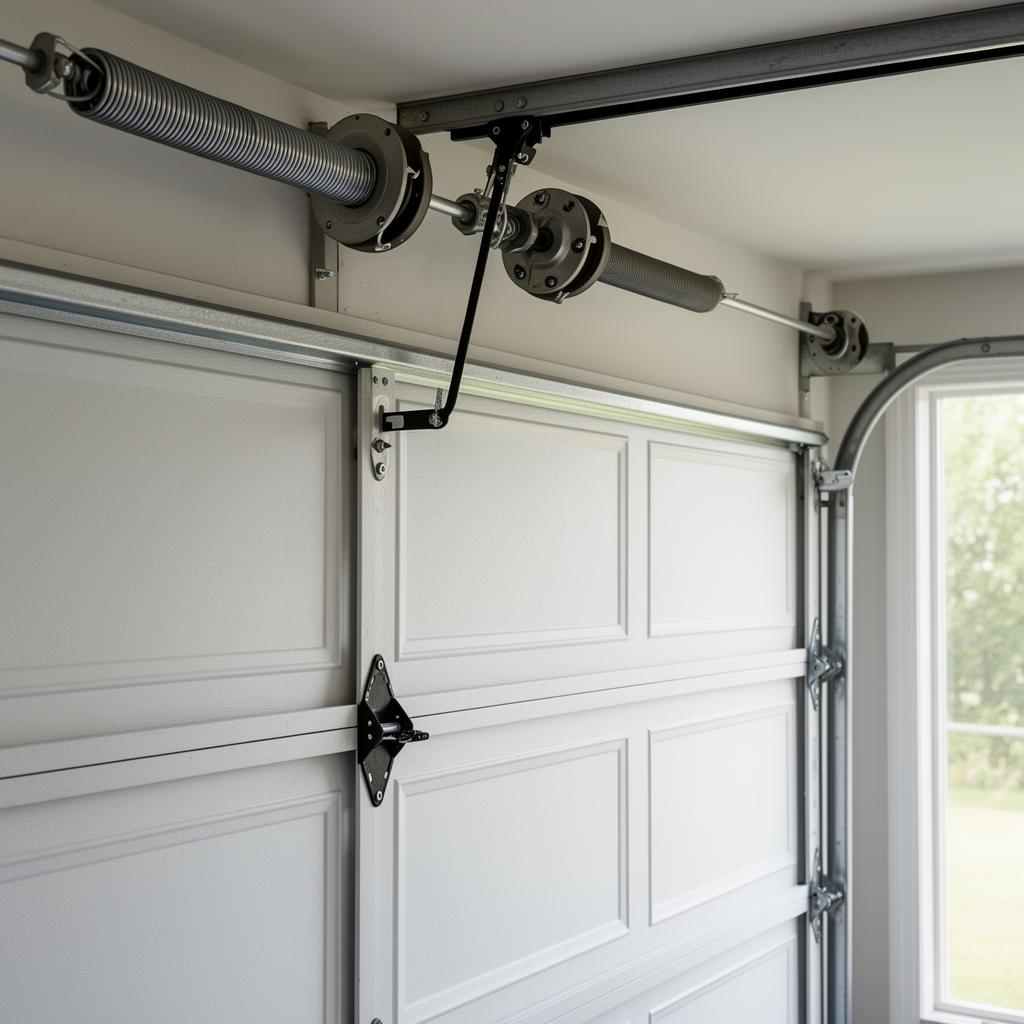
The fall tune-up that prevents most of this
Almost every failure on this page traces back to a part that was already worn going into winter. The cold didn't create the problem, it exposed it. That's exactly why a single fall check, done before the first hard freeze, catches most of what strands people in January. Late September into October is the window, which is why we're saying this now and not in December.
Here's what a real pre-winter check covers, and why each item is on the list:
- Spring inspection and cycle-life estimate. If your spring is past eight years or the door feels heavy by hand, we tell you before it snaps in the cold, not after.
- Balance test. A door out of balance makes the opener work harder, and a strained opener is the one that quits when the grease thickens. We disconnect the opener and check that the door holds at the halfway point.
- Lubrication with cold-rated grease. The wrong lubricant turns to glue at single digits. We use grease that stays workable when the garage doesn't.
- Bottom seal and weatherstripping check. A cracked seal is what lets meltwater pool and refreeze under the door. Cheap to replace in the fall, expensive when it drags a door off track.
- Roller, cable, and track check. Frayed cables and worn rollers are the parts that let go under the extra stress of a frozen or heavy door.
"The cheapest winter repair is the tune-up you booked in October. The most expensive one is the spring, cable, and opener you replace at once in a January driveway."
Insulation is the other piece worth a mention. A lot of the calls we run are on unheated or poorly sealed garages, and an insulated door holds enough heat to keep the space above the worst of the deep cold, which is easier on every moving part. It's not a repair, it's a way to stop needing them. Talk to a tech about a fall check: tell us what's going on and we'll come back with a straight assessment, or call (218) 515-2702.
When your winter garage door problem is NOT actually an emergency
Straight talk, because it saves you a service call. Not every cold-weather symptom needs a truck. If your door still cycles fully but just sounds rougher in the cold, that's usually normal contraction and stiff grease, worth a lube but not a repair. If the door sticks in one spot but still opens and closes, that's early track or roller wear you can watch, not the emergency. And if the opener won't run but the door lifts easily by hand, check the wall button, the remote batteries, and whether frost heave nudged the safety sensors out of line before you call anyone.
We'd rather tell you on the phone that you don't need us yet than send a tech for something you can sort in five minutes. Describe what the door is doing and we'll be honest about whether it's a wait, a DIY, or a call. That's the whole deal: (218) 515-2702.
Frequently Asked Questions
Not sure where to start?
Call now or request a free quote — we typically respond same day.
Ready to get started?
Local crew, done right, since 2010.