
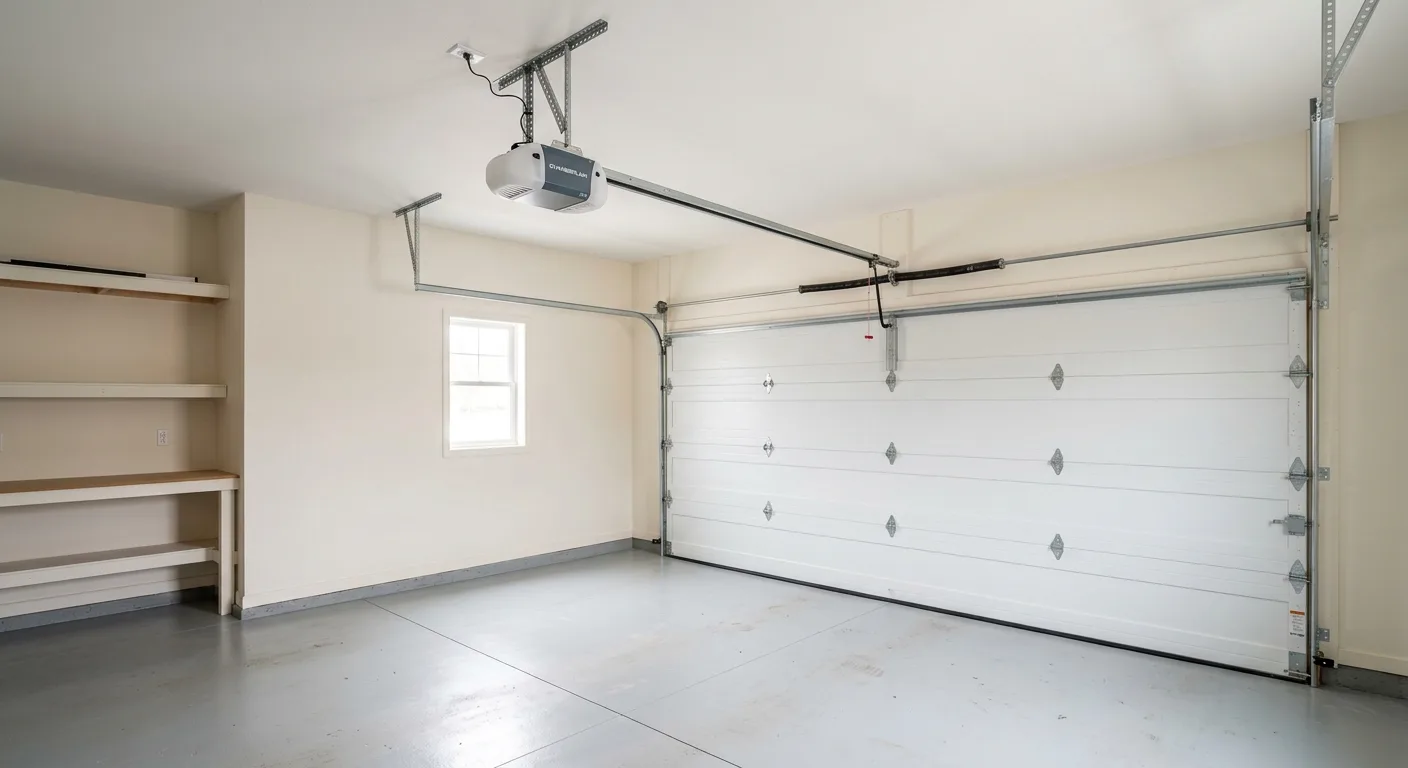
LiftMaster Garage Door Opener Not Working? Start With the Symptom
LiftMaster is the opener most Brainerd-area garages run, so it's the one we troubleshoot most. Match what your opener is doing to the fix below, and know the exact point where it stops being a DIY and becomes a call.
What's your LiftMaster actually doing right now?
Your LiftMaster opener quit, and you need it working. Advantage Garage Door Pros fixes openers across Brainerd, Baxter, and the lake country up through Nisswa and Crosslake, and LiftMaster is the brand we see on the wall most, so it's the one we troubleshoot every week. Find the symptom below that matches what your opener is doing, work the quick checks, and watch for the one line in each section that tells you to stop. Fully insured and bonded, running 24/7 since 2010: call (218) 515-2702.
A quick note up front: we service every opener brand, LiftMaster included. We're not a LiftMaster dealer and we don't need to be, so the diagnosis below is the same process we run on any chain, belt, or screw-drive unit. If your car is trapped behind the door right now, we answer 24/7.
Here's the part most brand articles skip. A LiftMaster that won't work is almost never the whole opener. It's one part, and the symptom points straight at it. A dead remote is a battery or a reprogram. A motor that hums but doesn't move the door is a stripped drive gear or a failed spring, not a dead motor. A flashing light is the opener telling you exactly what's wrong if you count the blinks. Knowing which one you've got is the difference between a two-minute fix and a truck roll, and it's why reading the right section below beats guessing at a replacement you may not need.
- Fully insured & bonded
- 24/7 emergency response
- Local crew since 2010
- No callbacks, no upsells
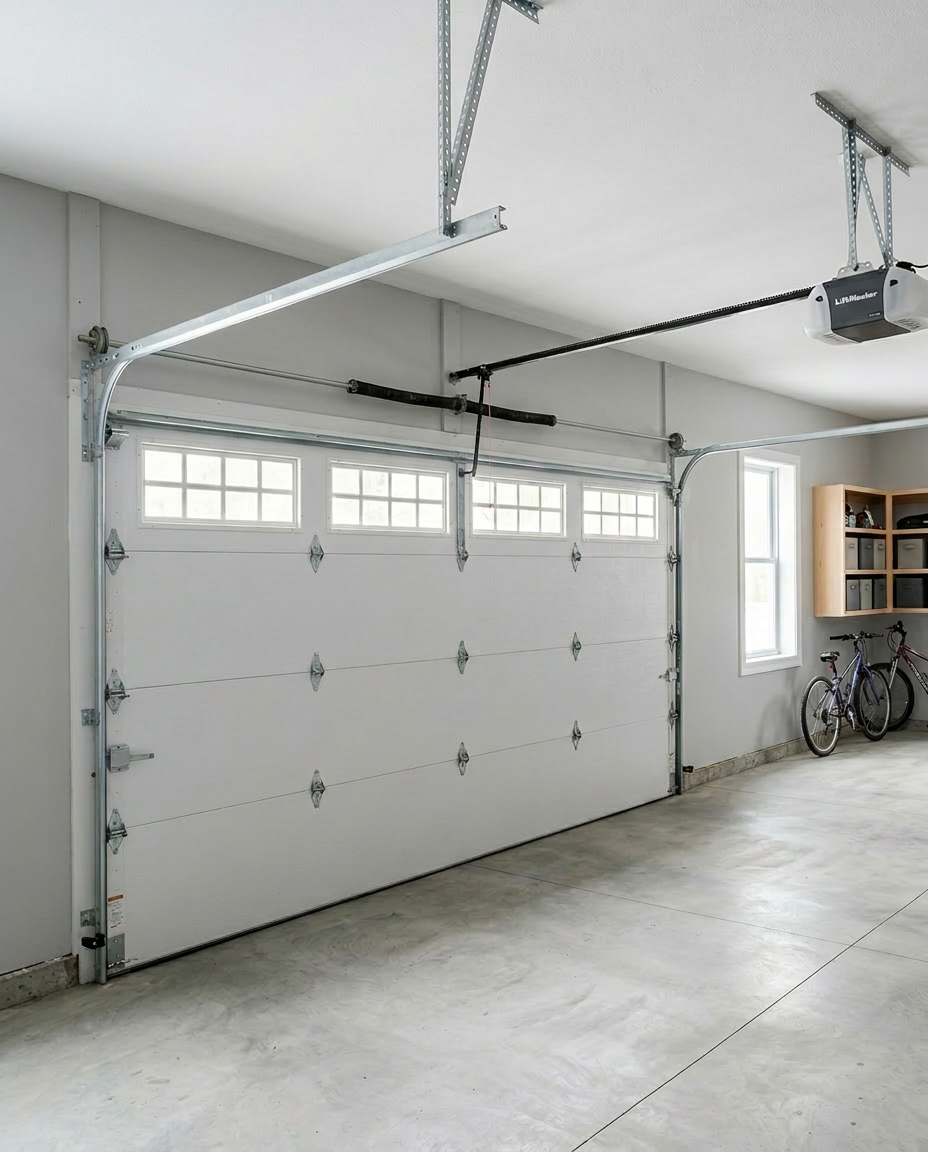
My LiftMaster garage door opener won't open or close at all. Where do I start?
A LiftMaster that's completely dead almost always comes down to power, safety sensors, or a lockout, and you can rule out all three in about two minutes before you touch a tool. Start at the wall: is the motor unit's light on when you press the wall button? No light and no sound means it's a power problem. A sound but no movement means the mechanism, covered in the next section.
Work these in order, because they're ranked by how often they're the actual cause on the calls we run:
- Check the power. Confirm the opener is plugged in (vibration walks plugs loose over the years) and that the outlet has power by testing it with a phone charger. A tripped GFCI or breaker is the single most common dead-opener cause we find, and it's a free fix.
- Check for a lockout. LiftMaster wall consoles have a lock button or vacation switch. If it's engaged, the remotes go dead while the wall button still works. One press clears it.
- Check the safety sensors. The two photo-eyes near the floor must see each other. If the opener won't close and the light blinks when you try, a blocked, bumped, or misaligned sensor is almost certainly why. More on that below.
- Check the manual release. If someone pulled the red release cord, the door is disconnected from the carriage. Re-engage it by pulling the cord toward the door, then running the opener once to relatch.
If power is good, nothing's locked out, the sensors are aligned, and it still won't run, that's past the quick checks. Call (218) 515-2702 and describe what the light is doing. We'll tell you over the phone whether it's a logic-board or wiring fault worth a truck. Our garage door opener repair page covers what we test before we ever quote a full replacement.
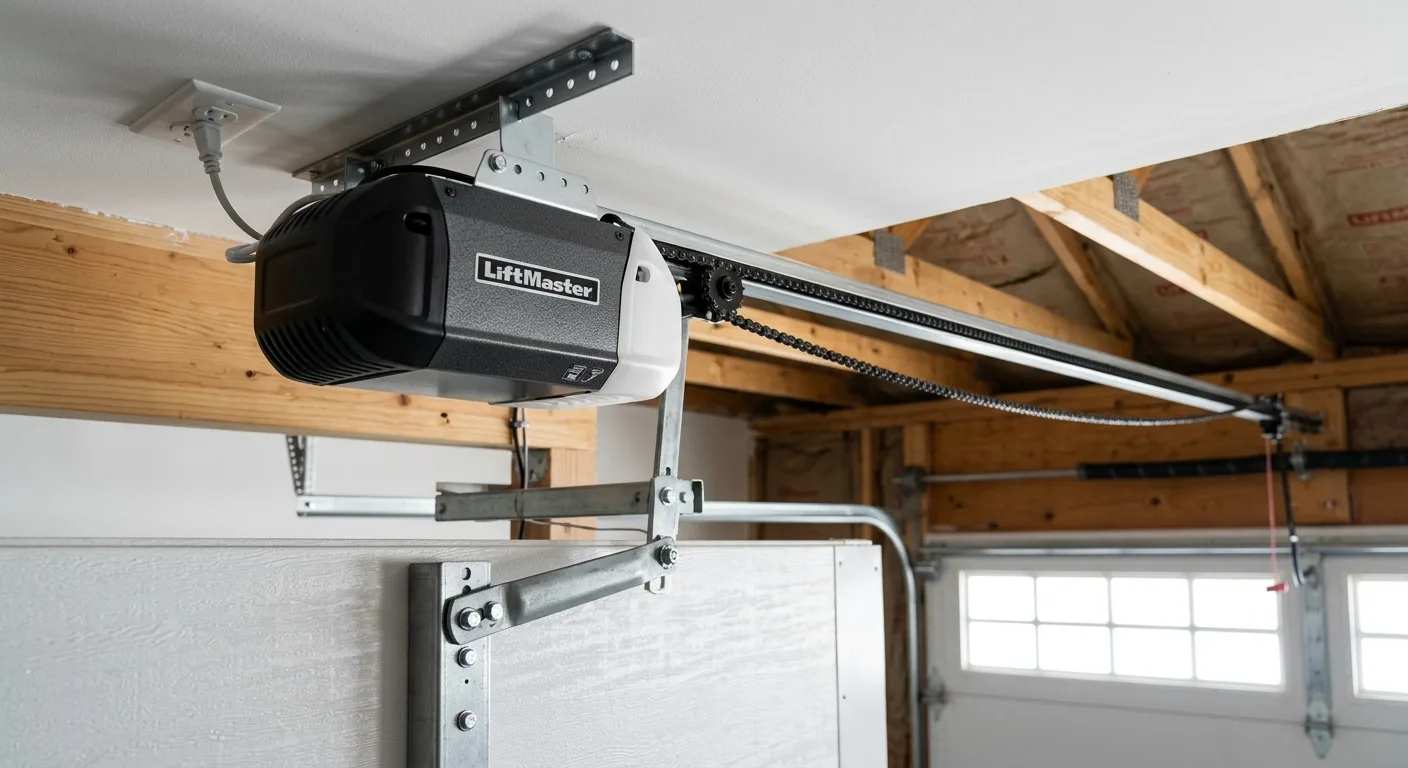
My LiftMaster motor runs but the door won't move. What's wrong?
This is the symptom that fools the most people, and it's the one where forcing it costs you the most. When the motor hums or runs for its full cycle but the door sits still, the motor is fine. The link between the motor and the door failed. There are three usual causes, and two of them are not actually the opener at all.
"The 'motor runs, door won't move' call is the one we most often talk people out of a new opener over. Nine times out of ten the motor is healthy. It's the drive gear or the spring."
Here's how to tell them apart. Pull the manual release cord to disconnect the door from the opener, then lift the door by hand.
- The door is heavy as lead and won't lift, or it's stuck partway. That's a broken spring, not an opener problem. The opener was straining against the full weight of the door and never had a chance. Stop running it. That's a spring replacement, and you can read what to do the moment a spring snaps first.
- The door lifts and moves smoothly by hand, but the opener wouldn't move it. The opener's plastic main drive gear stripped. This is the single most common internal LiftMaster failure, especially on chain-drive units that have run for years. You'll often hear the motor spin freely with a grinding or whirring note. It's a repairable part, not a reason to replace the whole unit.
- The carriage moves along the rail but never grabs the door. The trolley didn't relatch after the manual release was used. Run the opener once and it usually recouples.
A stripped drive gear is a clean repair when the motor and logic board are still good, which on a well-kept LiftMaster they usually are. Not sure which of the three you're looking at? Tell us what's going on and we'll come back with a straight answer.
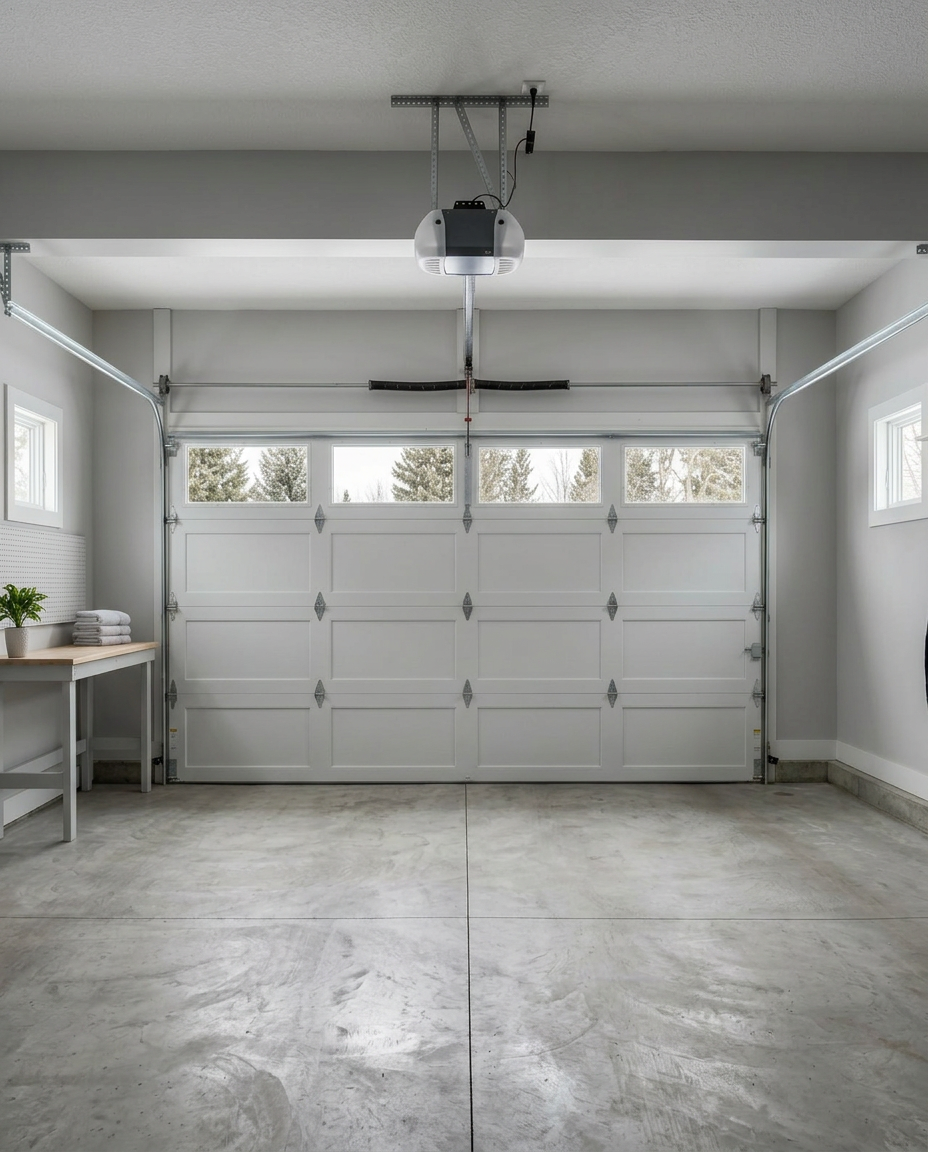
My LiftMaster opener light is flashing and the door won't close. What do the blinks mean?
A flashing LiftMaster light is good news: the opener is telling you what's wrong instead of leaving you guessing. The most common pattern by a wide margin is the opener light blinking (often ten times) when you press the button to close, and the door starting down then reversing back up. That is almost always the safety photo-eyes, not a failed opener.
The two sensors sit near the floor on each side of the door, about six inches up, and they have to see each other in a straight line. If anything breaks that beam, the opener refuses to close as a safety feature. Walk this in order:
- Look for a blockage. A bin, a bike tire, a broom, or a drift of leaves or snow across the beam will do it. Clear the path first.
- Wipe the lenses. Dust, cobwebs, or road grime on the little lenses blocks the beam. A soft dry cloth fixes it.
- Check the alignment. Each sensor has an indicator LED. When they're aimed at each other correctly, both glow steady. If one is dim, flickering, or off, gently nudge it until both are solid. In our garages, frost heave and a bumped bracket are the usual reasons a sensor drifts out of line over a season.
- Check the wiring. A staple pinching the sensor wire or a chewed wire breaks the circuit. Look along the wire run for damage.
If you've cleared the beam, cleaned and aligned both sensors, and checked the wire, and it still blinks and reverses, the fault is upstream of the sensors. That's a repair call, and it's usually a sensor or wiring replacement rather than a whole new opener. Ready when you are: (218) 515-2702.
My LiftMaster remote isn't working but the wall button is. How do I fix it?
When the wall button opens the door fine but the remote does nothing, the opener itself is healthy. The problem is at the remote. This is the easiest LiftMaster fix on the page, and it rarely needs a tech. Start with the obvious and work out:
- Replace the remote battery. A weak coin cell is the number one cause. Remotes often fail gradually, working only up close before they quit entirely. Swap the battery first.
- Reprogram the remote to the opener. Press the Learn button on the motor unit (there's an LED next to it), then press the remote button within thirty seconds. The opener light blinks or clicks to confirm it paired. Power flickers and dead batteries can wipe a remote's pairing.
- Check the antenna. The short wire hanging from the motor unit is the antenna. If it's been tucked up, cut, or coiled, range drops. Let it hang straight down.
- Rule out interference. New LED shop lights and some electronics put out radio noise that shortens remote range. If the remote only works within a few feet, try it with the garage lights off to see if that's the culprit.
If a fresh battery and a reprogram don't bring the remote back, and the keypad's out too, the receiver side of the opener is the suspect. Tell us what's going on or call (218) 515-2702 and we'll sort whether it's a part swap or a board.
My LiftMaster opener is slow or won't work in the cold. Is that normal?
Partly yes, partly a warning. Central Minnesota garages that aren't heated routinely sit in the single digits by January, and cold does two real things to a LiftMaster: it thickens the grease on the rail and in the motor so the opener drags, and it stiffens the rubber rollers and weatherstrip so the door itself is harder to move. A healthy opener handles that with a little extra effort. A tired one quits.
"The opener that dies on the first cold snap is almost always the one that was already getting louder and slower in the fall. The cold didn't break it. It finished it."
So the real question isn't whether cold slows a LiftMaster. It's whether yours was already on the edge. Here's the line we draw:
- Normal: the door runs a touch slower and the opener sounds a bit rougher on a sub-zero morning, but it completes every cycle. A fresh application of cold-rated garage-door grease on the rail and rollers usually smooths it right out.
- A warning: the opener now hesitates before it starts, needs two taps, or strains and stops partway when it was fine a month ago. That's a motor or capacitor that's near the end, and cold is exposing it.
- Stop: the opener reverses or stalls mid-travel repeatedly, or the motor hums without moving the door. Running it hard in the cold from here risks stripping the gear.
If your LiftMaster has been getting louder or slower heading into fall, a check now beats a no-start in a January driveway. Call (218) 515-2702.
When a LiftMaster problem is NOT worth a service call yet
Straight talk, because it saves you money. Not every LiftMaster quirk needs a tech, and we'd rather tell you that on the phone than send a truck for something you can clear in five minutes. If the door closes fine but the opener light is out, that's usually just a burned-out bulb (LiftMaster has specific bulb requirements, so check the manual for the right type). If the remote works up close but not from the driveway, that's a battery or antenna, not a failed opener. If the door reverses and the light blinks ten times, that's the safety sensors, and clearing and aligning them is a homeowner job.
Work the matching section above first. If you've done the quick checks and the opener still won't behave, that's when a call is worth it. Describe what the opener is doing and what the light is showing, and we'll be honest about whether it's a DIY, a part, or a truck: (218) 515-2702.
Frequently Asked Questions
Not sure where to start?
Call now or request a free quote — we typically respond same day.
Ready to get started?
Local crew, done right, since 2010.