
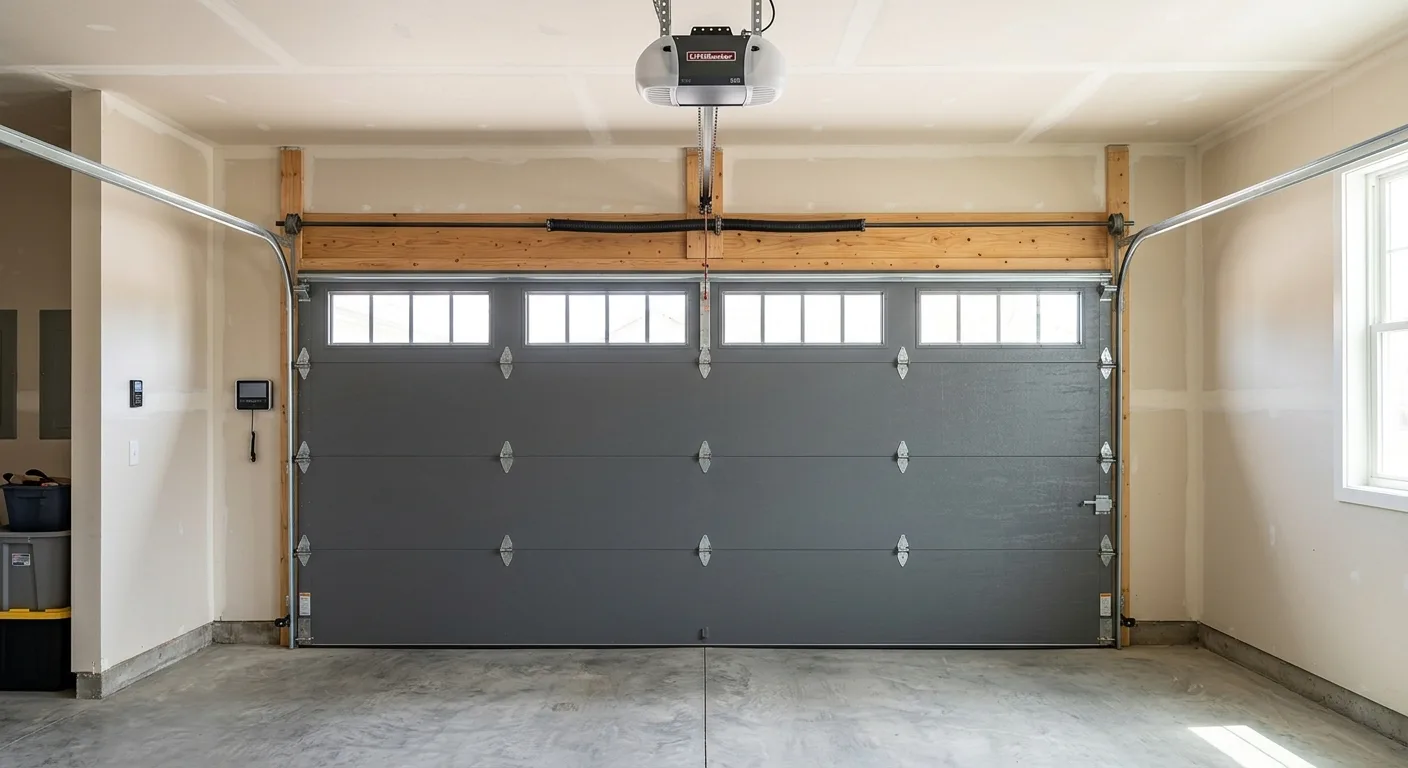
Broken Garage Door Spring? Here's What To Do First
Don't run the opener. Here's how to tell if the spring is really gone, whether it's safe to lift the door, and how to get it fixed the same day across the Brainerd Lakes area.
Your spring snapped and the door won't budge. Read this before you touch anything.
A broken garage door spring is the reason your door climbed a few inches and stopped, or won't move at all, and it's why the opener is straining like it's about to give out. The spring is the part that carries the door's weight. When it snaps, the opener is suddenly trying to lift 130 to 400 pounds of steel it was never built to move, and forcing it is how a one-part repair turns into a bent track, a stripped opener gear, or a door off the rails. We've run broken-spring calls across Brainerd, Baxter, and the lake country up to Pequot Lakes since 2010. We're fully insured and bonded, we carry the common spring sizes on the truck, and we can usually have you moving again the same day. Call (218) 515-2702 and don't run the opener until we've looked at it.
This page is the diagnosis-and-safety side of the problem: how to confirm the spring is what failed, whether the door is safe to open by hand, and why so many of these break during the first hard cold snap of the year. When you're ready for the fix itself, our same-day spring replacement page covers the repair, spring types, and what drives the cost.
- Fully insured & bonded
- 24/7 emergency response
- Local crew since 2010
- No callbacks, no upsells
How do I know if my garage door spring is broken?
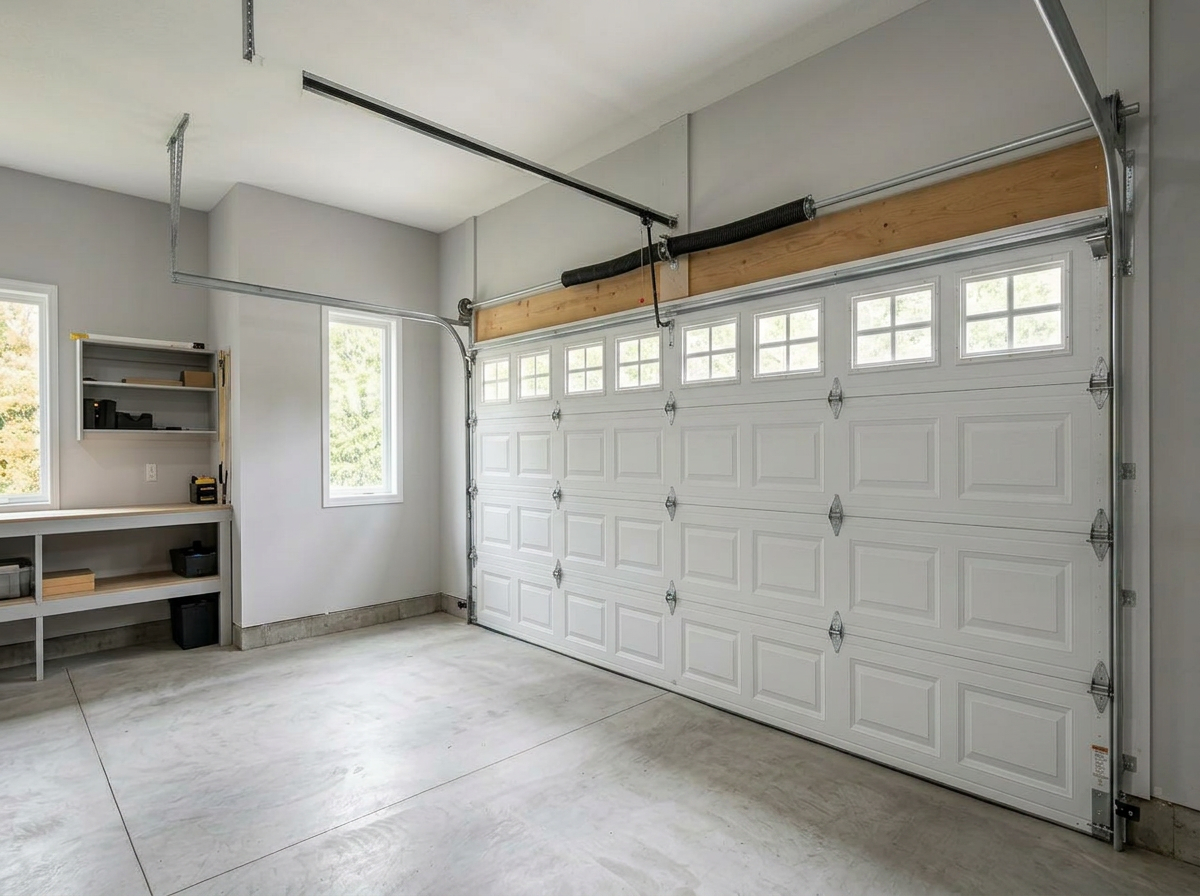
The tells are usually obvious once you know what you're looking at. The door lifts three or four inches and stops dead, the opener hums and strains against weight it can't move, or you heard a loud bang from the garage earlier, often overnight, which is the spring letting go. That bang throws people off. It sounds like something hit the door from outside.
The fastest way to confirm it's the spring
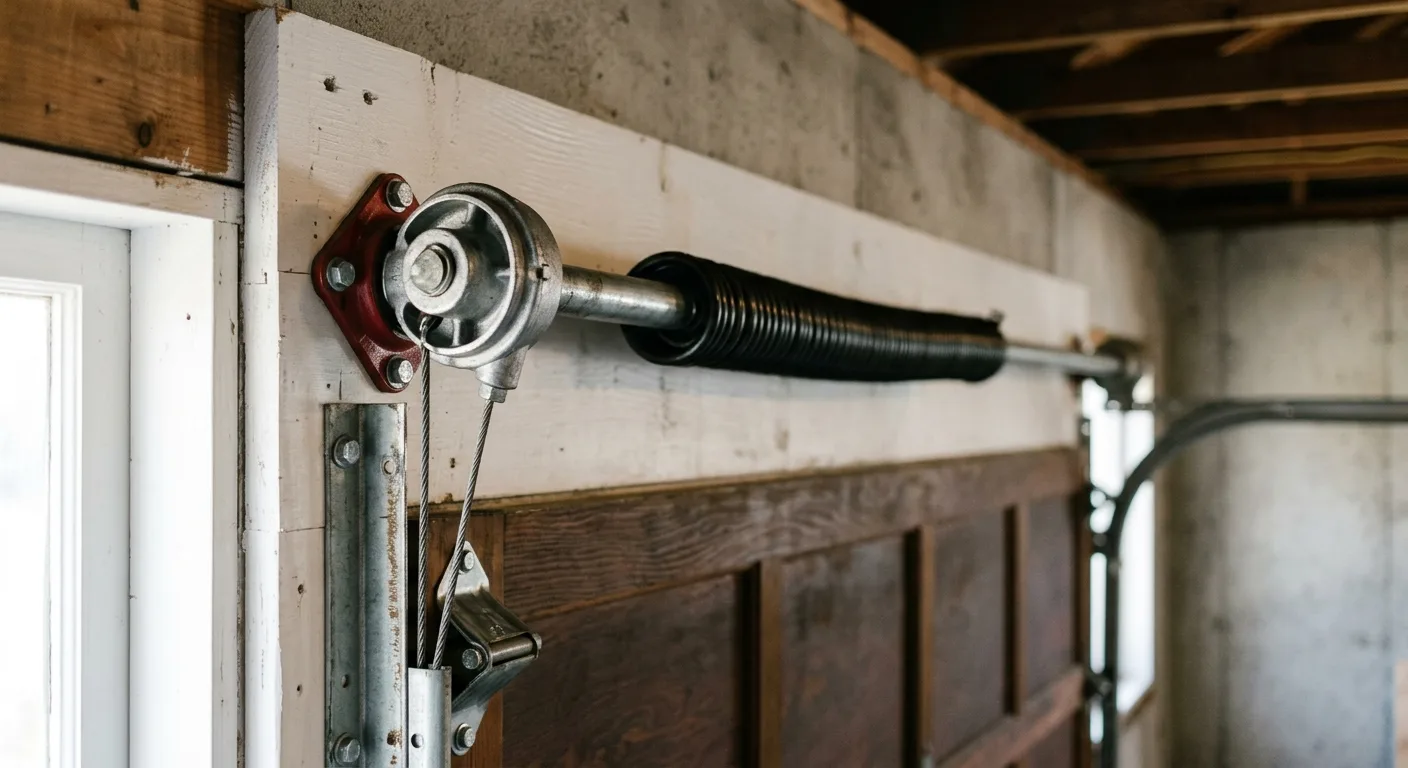
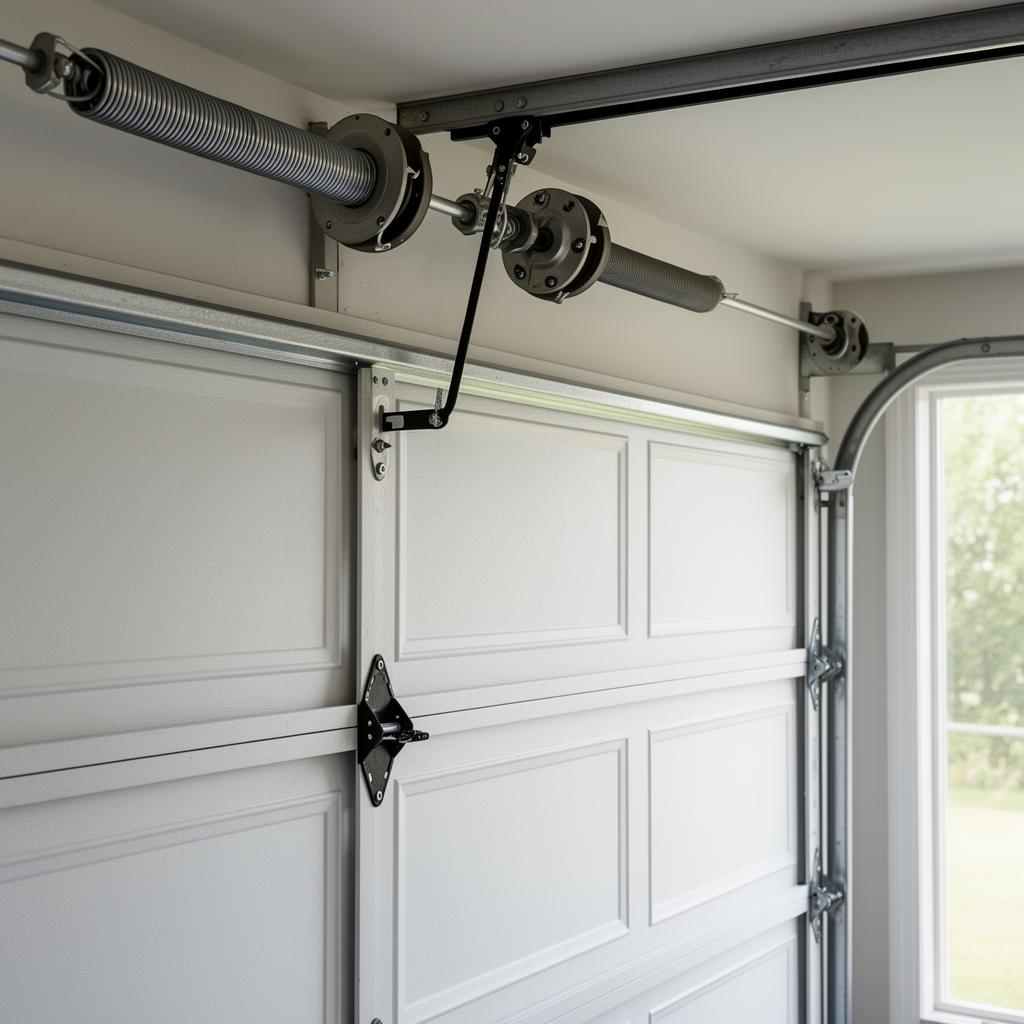
The fastest confirmation is to look at the torsion spring on the shaft above the door. A healthy spring is one tight, continuous coil. A broken one has a clear two-inch gap where it separated, sometimes with the two ends spun apart.
The signs, at a glance
Run through these before you assume it's something else:
- The door opens a few inches, then stops and won't go higher
- The opener motor runs but the door doesn't move, or moves crooked
- There's a visible gap in the coil on the spring above the door
- The door slammed down hard the last time it closed
- Lifting the door by hand (opener disconnected) feels like dead-lifting the full weight with no help
If you've confirmed the gap in the coil, you don't need to diagnose further. That's the whole answer, and the fix is a spring replacement, not an opener repair. Call (218) 515-2702 and we'll bring the matching spring.
Is it safe to open a garage door with a broken spring?
No. Not with the opener, and not by hand beyond a quick test. With the spring gone, nothing is counterbalancing the door's weight, so the full 130 to 400 pounds is riding on the cables, the opener carriage, and whatever's still holding tension. Force it and the door can drop fast, jump the track, or rip the opener mount off the ceiling joists.
"The worst damage we fix isn't the broken spring. It's what happened after someone kept hitting the opener button to make the door go up."
Running the opener against a dead spring is the single most expensive mistake we see. The motor labors, the gears strip, and now you've got a spring job and an opener repair instead of one clean fix. If a cable is also frayed, forcing the door can snap it, and a cable under that load whips hard.
What to do the moment the spring goes
Here's what to actually do the moment you realize the spring is broken:
- Stop pressing the opener button. Every cycle makes it worse.
- Pull the manual release rope (the red cord hanging from the opener rail) to disconnect the door from the motor.
- Leave the door in whatever position it's in, closed if possible, and don't park under it.
- Keep kids and pets clear of the opening until it's fixed.
- Call (218) 515-2702. We run emergency calls because a door stuck open in January isn't a next-week problem.
A broken spring often takes a cable or drum with it, which is why we check the whole system before we re-tension anything.
Torsion vs extension springs: which one do you have?
There are two systems, and knowing which you have tells you what failed and how it gets fixed. You don't have to identify it yourself, we do that on-site, but it helps to understand the difference.
Torsion springs (most common today)
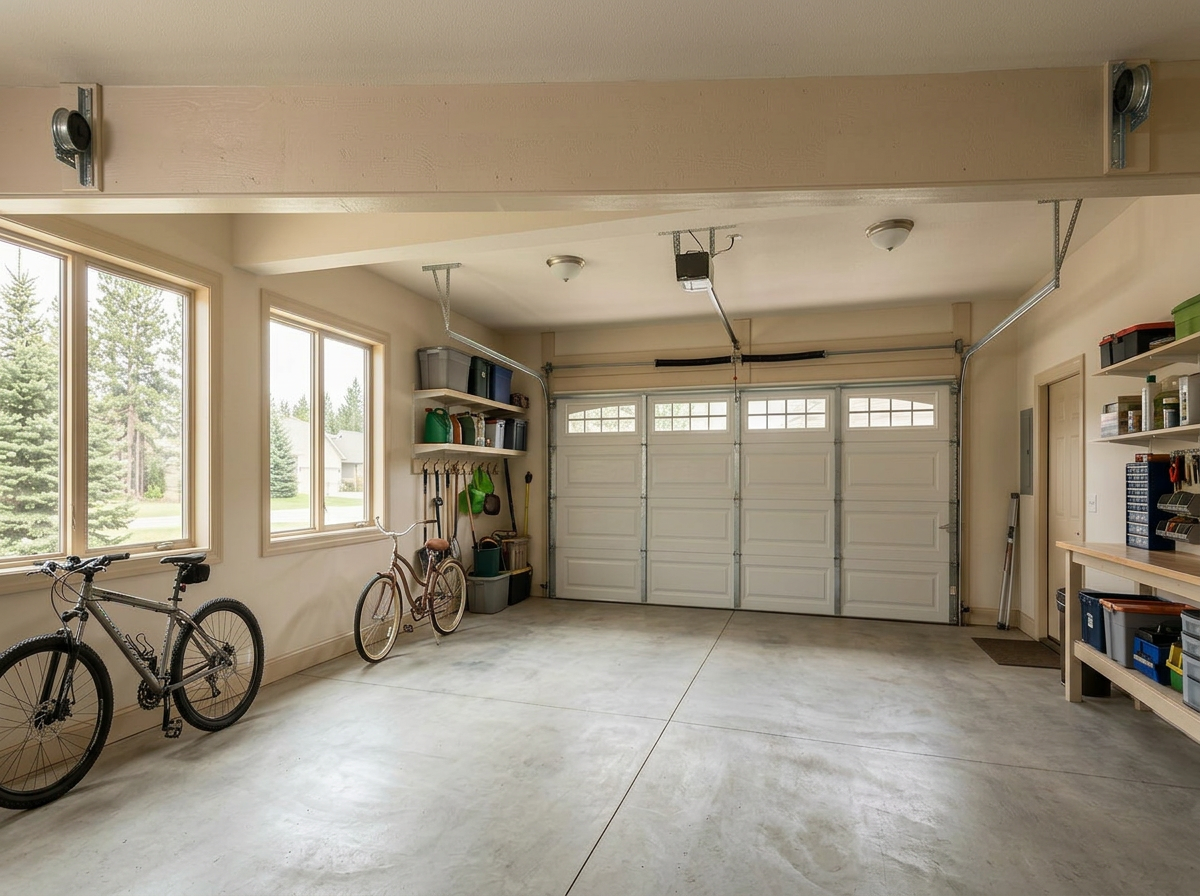
Torsion springs mount horizontally on a metal shaft above the door opening. They're the standard on most modern residential garage doors and they're rated for a set number of open-close cycles, usually 10,000 to 20,000. They wind and unwind to lift the door, and they store a serious amount of energy under load.
Extension springs are the other type. They run along the horizontal tracks on either side of the door and stretch to counterbalance the weight. You'll see them more on older, lighter doors around the region, and they need a safety cable threaded through them so a broken spring can't become a projectile.
- Torsion: single (sometimes double) spring on a shaft above the door, most common today
- Extension: a spring stretched along each horizontal track, common on older doors
- Either way, the replacement has to match your door's exact weight, height, and cycle rating
An undersized spring fails early. An oversized one throws the balance off and chews up the rest of the hardware. Matching it right is most of the job.
Why do garage door springs break in winter?
Because cold is the final straw on a spring that was already near the end of its life. Steel contracts and gets more brittle as the temperature drops, and a spring that's been quietly wearing down for years often lets go on the first hard freeze of the season. That's not a coincidence. It's the pattern we see every year across the lakes.
"Our phone lights up the morning after the first real cold snap. Same story every year: the door was fine yesterday, and it wouldn't budge this morning."
Central Minnesota is hard on springs for reasons beyond the cold itself. The Brainerd Lakes area swings from below-zero mornings to afternoon thaws all winter, and that repeated freeze-thaw cycling flexes the metal more than a steady climate would. Lake homes around Nisswa and Crosslake also tend to run bigger, heavier doors on wider openings, which means the springs carry more load every single cycle and reach their wear limit sooner. Add the older housing stock through Crosby, Aitkin, and Staples, where a lot of doors are still on their original springs, and you get a reliable winter wave of failures.
None of that means winter breaks are your fault or a fluke. It means if your door is aging, the smart move is to have the spring checked before the deep cold, not after it strands your car in the garage.
When this page is NOT your problem
Straight talk: if the door lifts normally by hand with the opener disconnected but the motor won't run, your spring is fine. That's an opener, remote, or power issue, not a spring, and you don't need a spring replacement. Same if the door only sticks in one spot or gets noisy but still cycles fully, that's usually track or roller wear. We'd rather tell you that on the phone than sell you a spring you don't need. Call (218) 515-2702 and describe what the door is doing, and we'll tell you straight.
Frequently Asked Questions
Not sure where to start?
Call now or request a free quote — we typically respond same day.
Ready to get started?
Local crew, done right, since 2010.